What is AURORAL?
AURORAL is a data interoperability ecosystem that allows the integration of heterogenous infrastructures owned by different stakeholders that eventually can interact and exchange data among them.
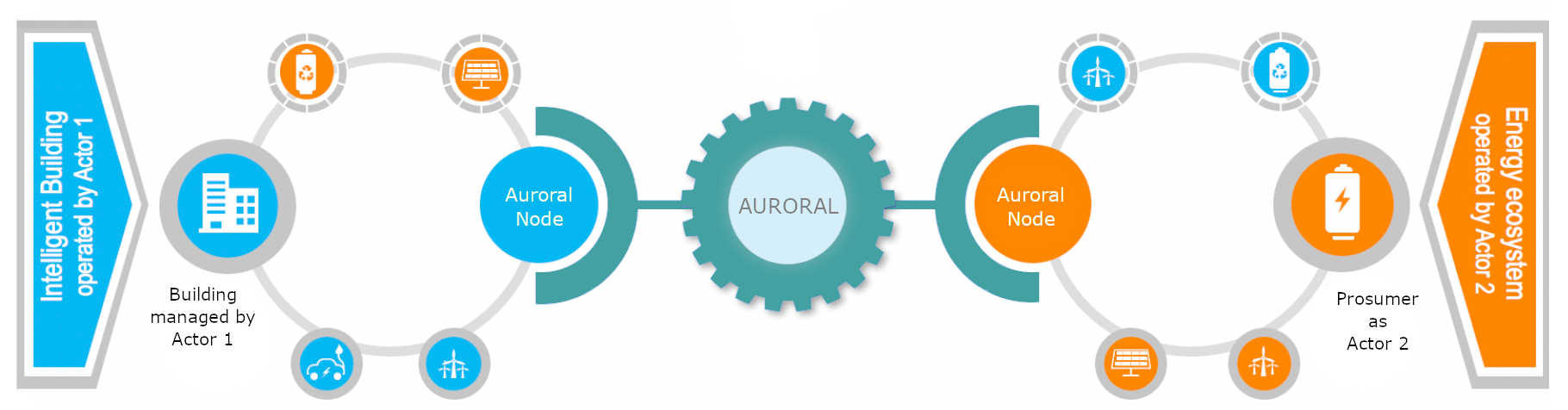
- Data interoperability ecosystem, by using same data models and standards to interact among AURORAL participants
- Integration of heterogenous infrastructures, by supporting AURORAL users to integrate different types of technologies with adapters, and also help generating RDF mappings for their data
- Different stakeholders, by having a constellation of nodes owned by different users that can interact and create relationships
- Interact and exchange data, by enabling the transparent discovery and exchange of data using common APIs and data models, among users that agreed to do so with partnerships or data sharing agreements
What are the working principles?
AURORAL platform inherits parts of the architecture and components from the VICINITY H2020 project platform. VICINITY platform was oriented to work with IoT devices and based the control and exchange of data on a XMPP network. AURORAL platform plans to go beyond that, giving support to other data transfer protocols and providing functionality to other types of data or new paradigms as the data spaces.
AURORAL is composed by two main parts:
- The control plane or AURORAL cloud, which is managed through the Neighbourhood Manager website and allows management and configuration of the XMPP network.
- The distributed nodes, which provide functionality to integrate data and interact with other nodes in the platform.
Some other benefits derived from using XMPP technology are that AURORAL gives support to infrastructures that do not necessarily have a public DNS, and also, XMPP is a good technology for federation, thus openining the door to have different AURORAL based platforms able to interact among them.
AURORAL security relies on PKI and JWT for controling identities and allowing interactions, while also uses channel encryption and benefits from built-in security features of the XMPP server. But one of the biggest privacy and security features is that the user data is actually living in the user infrastructure (behind the AURORAL node). Therefore, AURORAL is not holding any data, not even context data, limiting potential data loses.
In regards to the platform governance, AURORAL has a democratic system where all organisations are at the same level and have absolute control of their assets. There are several ways to share metadata and/or data that will be described in future sections. However, AURORAL is learning from the interaction with real users and extending the options to collaborate based on the feedback received.
In order to be up-to-data in a fast changing environment, AURORAL aims to grow in the and enhance its interoperability capabilities so options like extending support to integrate other ontologies or IoT platforms, or extension of the IDM and authentication capabilities, where DID and Verifiable Credentials are on the table. A complete roadmap with new features plan should be made available shortly.
So what can I do with it?
- It is possible to join the collaborative neighbourhood and configure identities and relationships with other organisations there.
- Then you can join your infrastructure or service to AURORAL using the Node
- There are adapters that can be installed with the Node to integrate various technologies or data sources, or you can develop your own.
- Node-RED adapter
- Semantic adapter - Helio
- Custom adapters
- Once you are integrated in the ecosystem, you can start joining communities or establishing partnerships in the neighbourhood, an eventually create agreements to share data.
- Now you are ready to use the AURORAL Open API locally with your Node, to discover and access data from your infrastructure or remote nodes.